
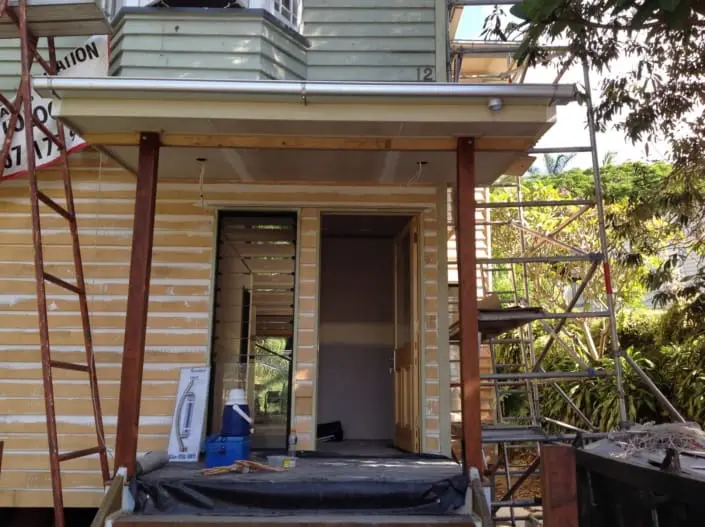
01 — Find it, then fix it
Damage is always bigger than the hole
Termites hollow timber from the inside, so what you can see is the end of the trail rather than the extent of it. The same goes for rot around a leaking shower or a blocked box gutter. Before quoting a repair we trace the affected members — under the floor, inside the wall, up in the roof — and mark where sound timber starts again.
Treatment and repair are two different licences. A licensed pest manager deals with the colony first; we come in afterwards and replace structure, because new hardwood put into an active nest is money spent twice.
Where a repair needs an engineer's detail or a certifier's approval — a beam, a wall frame carrying roof load, stumps under a whole section of house — that is arranged as part of the job, not left with you.
What we repair
- Termite-damaged bearers, joists, stumps and wall frames
- Rotted timber from shower, gutter and roof leaks
- Sagging, springy and uneven floors levelled
- Failed stumps and footings replaced or underpinned
- Rafters, battens and roof members made sound
- Recurring cracks in cornices and walls investigated
- Storm and impact damage rebuilt and documented
- Linings, flooring and finishes made good afterwards
02 — How it runs
Four steps, in this order
Inspect
Subfloor, walls and roof space checked to find where damage stops. Photographed as we go so you see what we see.
Treat first
Your licensed pest manager deals with the colony, or we refer one. Repairs start after the nest is handled.
Rebuild
Propped, damaged members cut out and replaced in treated or durable-class timber, then re-levelled and fixed off.
Stop the cause
Leaks fixed, subfloor ventilation and drainage improved, timber kept clear of soil — so the same repair is not needed twice.
03 — Recent work
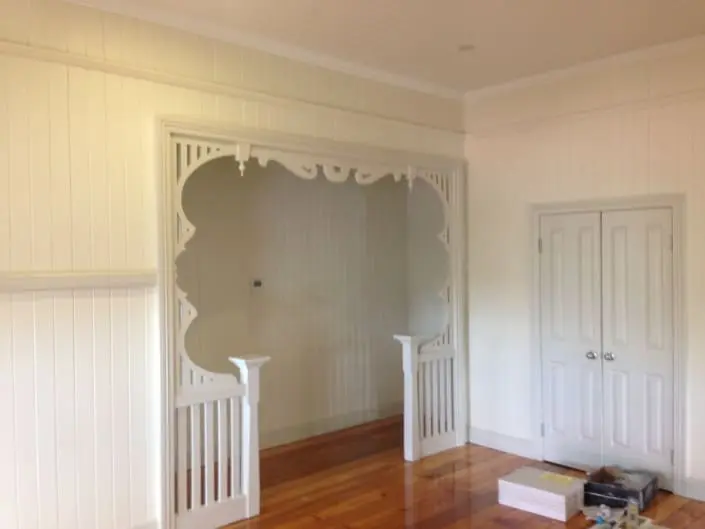
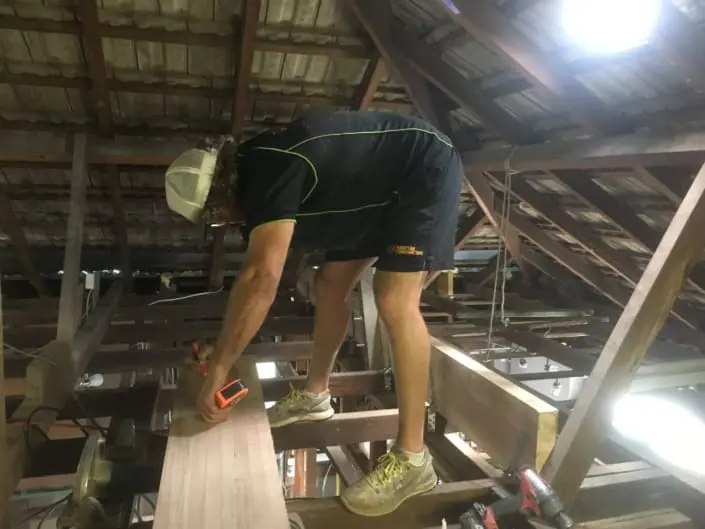
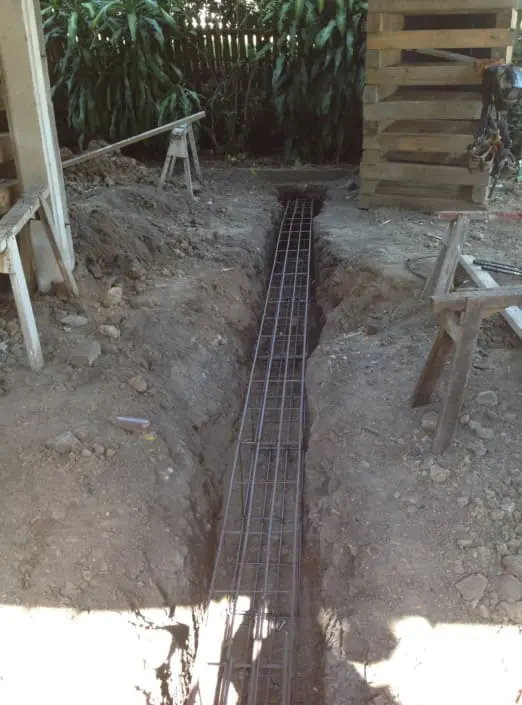
On the job
04 — Questions
Damage repair FAQ
Worried about something you have found? Call 0402 847 873 and describe it.
Do you treat the termites as well?
No — treatment must be done by a licensed pest management technician, and it should happen before the rebuild so new timber is not going into an active nest. We work alongside your pest manager, or refer you to one, then replace the damaged structure.
How do I know if the damage is structural?
Floors that bounce or dip, doors and windows that suddenly stick, skirtings that sound hollow, cornice cracks that return after patching, paint blistering in a line along a stud. Any of those in a Queensland home warrants a look under the floor and in the roof space before it is patched over.
Will insurance cover it?
Most Australian policies exclude termite damage as gradual deterioration, while storm, impact and sudden water damage are usually covered. Check your PDS. We can quote and document repairs in the format an insurer or assessor expects either way.
Can you fix a sagging or springy floor?
Yes. It is usually undersized or damaged joists, failed stumps, or bearers that have lost bearing. We open up, work out which, then sister or replace the members, pack and re-level, and make good the flooring above.